
Finding a new mission after military service
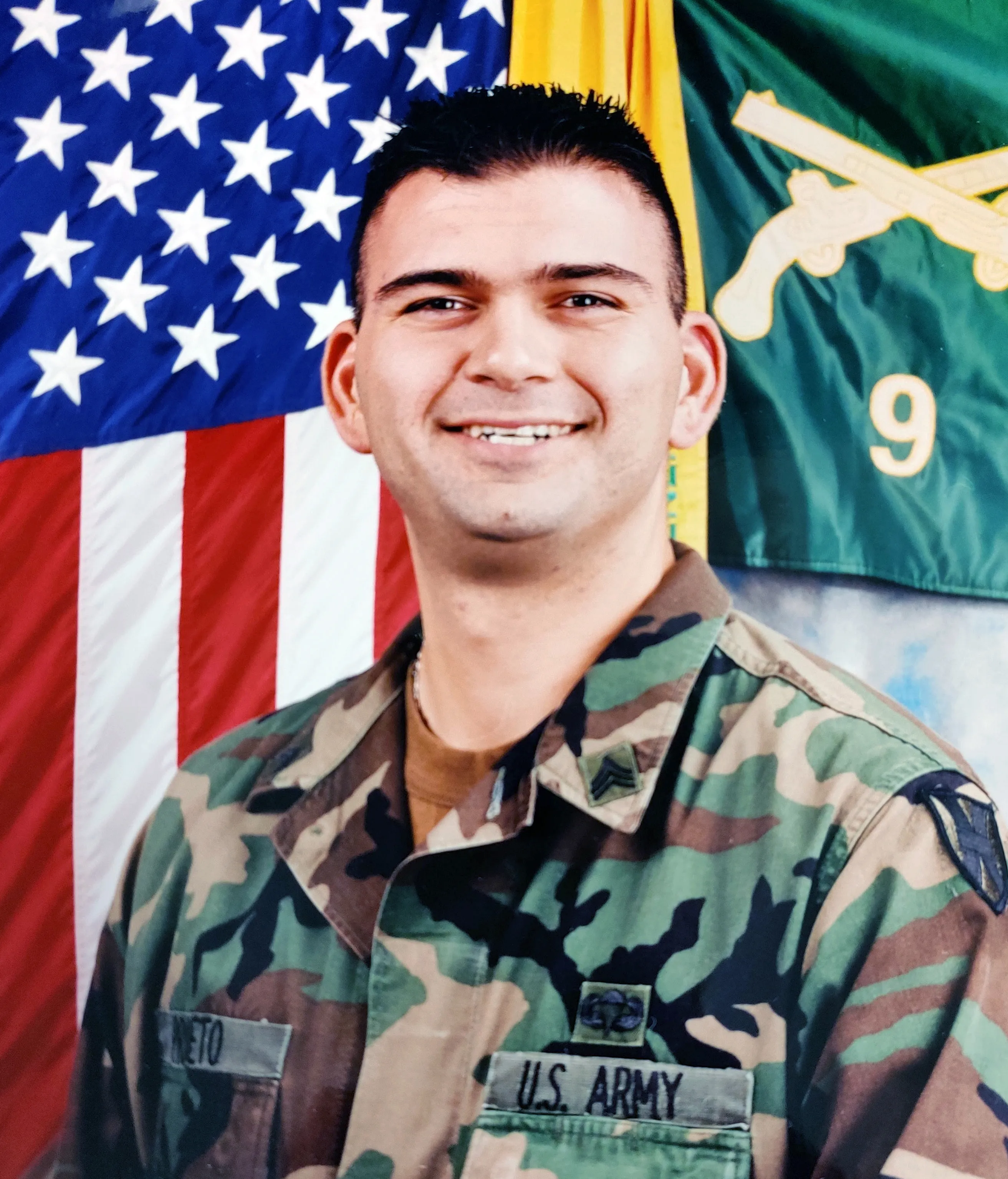 Jodie P., Manager, Regulatory Readiness, AHN Wexford Hospital, Veteran,
 United States Army
A calling to help from day one.
Jodie P.'s healthcare career didn't start in a hospital – it was on a battlefield.
At just 17, Jodie joined the U.S. Army, choosing a path that would enable him care for others.
"I wanted to get the practical skills of helping people," Jodie said. "I just want to be a part of my country's efforts to do good."
That decision led to a 20-year military career as a healthcare specialist, also known as a combat medic, serving across the U.S. and internationally in places like Germany, Iraq, and Kosovo.
Along the way, Jodie built a foundation in patient care, leadership, and adaptability. From providing frontline care in combat zones to overseeing complex medical operations, his experience shaped how he sees his role in helping others both inside and outside the military.
Translating military experience into a civilian career
Transitioning out of the military isn't always straightforward, and Jodie's experience reflects what many veterans face.
"I think I interviewed for a lot of wrong things," Jodie said. "It was a lot of just trying to figure out how to be a civilian again."
Despite deep experience in healthcare, Jodie found himself navigating a wide range of opportunities from compliance roles to even creative paths like writing. It highlighted the common challenge of veterans trying to understand how their skills translate into civilian careers.
But Jodie's diverse military background in aviation, medicine, corrections, and emergency care had already prepared him in ways he hadn't fully realized yet.
"They gave me a lot of skills and a lot of range of experiences that have really served me well in my civilian career," Jodie said.
That realization helped him find the right fit.
Jodie P., Manager, Regulatory Readiness, AHN Wexford Hospital, Veteran, United States Army
Continuing the mission
For Jodie, the desire to help didn't end when he took off the uniform, but it did end up changing.
His work today as a manager of regulatory readiness, is driven by experiences that left a lasting impression during his time as a combat medic, especially moments where preventable errors had serious consequences.
"I approach my work with passion and zeal. I really want to help prevent avoidable mistakes and to help protect the licensure and the readiness of the organization," Jodie said. "Without our clinicians and without our facilities, we don't have any patients and we can't help anyone then."
That mindset fuels his work in regulatory and quality roles, where he focuses on patient safety and improving outcomes.
This role in regulatory is a continuation of the same mission he started in the military. He was still protecting and caring for others just in a new environment.
A culture that feels familiar
One of the biggest surprises in Jodie's transition was how much the culture felt like home.
"AHN welcomes multidisciplinary views and different perspectives to create safer patient outcomes. And that's something that the military is really big on with small unit leadership," Jodie said. "They're very good at AHN - and in the military - at trusting leaders with small teams to make huge impact in people's lives, to accomplish the mission, and to add value to the organization by sharing their lessons learned. Not a lot of civilian agencies to do that."
He found similarities in teamwork, accountability, and leadership without the rigidity often associated with military structures.
"AHN has a hierarchy similar in some ways to the military, but without being militant," Jodie said. "It was just a really good fit."
During critical moments like the COVID-19 pandemic, that culture became even more visible.
"Here's this senior leader taking their time to make sure the process is being done right, checking on their people and deferring expertise, promoting the expertise and endorsing it," Jodie said. "In the military we put a value on servant leadership. I see that a lot in AHN. That's very much a shared attribute they have."
A Strong Veteran Community
Jodie quickly discovered he wasn't alone. "There's so many veterans in the organization and they were so welcoming," Jodie said.
He also learned that AHN truly supports veterans. "A lot of companies talk a good game about virtue signaling and buzzword bingo saying that they're veteran friendly," Jodie said. "It's just really interesting and good and satisfying to see a company that actually collaborates, and actually does things more than emails and events."
Through both formal programs like the Veterans Business Resource Group and informal connections across teams, he's built a network that supports career growth and shared understanding.
He's also passionate about helping other veterans find their place.
"I joined the Veterans Business Resource Group, trying to advocate wherever I can for veterans' rights and to see if we can help get veterans a job," Jodie said. "I believe that a lot of the veterans believe that they're underqualified and they're intimidated by a lot of these positions. And what I found out is that a lot of these positions and processes just go by a different name."
Through mentorship and advocacy, Jodie helps bridge that gap and shows others how their skills translate into meaningful careers.
Advice for Veterans Starting Their Next Mission
If there's one message Jodie wants other veterans to hear, it's this:
"Don't sell yourself short," Jodie said. "You've been trained to do more than a lot of people have been. Our government invested a lot of time and energy in you, and it's hard to see that, but keep your nose to the grind and keep moving forward."
He understands first-hand how overwhelming the transition can feel, but he also knows the value veterans bring to the table.
"There's people out there that want to help you and want you to be successful because if you're successful, the whole team is," Jodie said.
Inspired by Jodie's story? Explore career opportunities at AHN and discover how you can make a difference.